
Organisational structure
The City of Clarence is structured into work groups (departments). Each group is led by a Group Head, and the Heads together form the Executive Leadership Team (ELT).

Head – Chief Executive Officer Ian Nelson
Office of the Mayor and CEO
Administers Council meetings, provides executive support for the Mayor and supports the leadership to the council by the Chief Executive Officer.
This group is based in the Chambers administration building.

Head of City Planning – Daniel Marr
City Planning
Administers the Tasmanian Planning Scheme (which includes the Clarence Local Provisions Schedule), processes subdivisions and development applications and heritage issues. See planning and development.
This group is based at 10 Bayfield Street, Rosny.

Head of Community and Culture – Tracey Cockburn
Community and Culture
Services to the community in the areas of children, young people, older people and volunteering. In addition, community grants, arts including Rosny Farm and community events programs. This group delivers services from a number of sites including a youth centre in Rokeby, Rosny Early Learning in Montagu Bay, before and after school care from various locations.

Head of Regulatory Services – Rudi Brennan
Regulatory services
Administration and enforcement of legislation, permits and compliance requirements.
This Group includes the area of public health and environmental management, as well as parking enforcement and animal management.

Head of Finance (Chief Finance Officer) – Jane Murrell
Financial Management
Raising and collecting rates and ensuring Clarence meets its statutory and regulatory requirements with regards to financial matters. See How we are funded.
This group is based in the Chambers administration building.

Head of Governance – Clare Shea
Governance
By-laws, legal matters, property leases and transactions, procurement and risk management. See By-laws.
This group is based in the Chambers administration building.

Head of Information and Data (Chief Information Officer) – Albert Hannemann
Information Services and Data
Supports Council and officers through technology, data, and digital services, while driving digital transformation that benefits the organisation and community.
This group is based in the Chambers administration building.

Head of People, Safety and Culture – Nikki Curtin
People, Safety and Culture
Supports a safe and supportive workplace to build individual and organisational potential.
This group is responsible for payroll and recruitment, work health and safety and injury management, as well as emergency management and is based in the Chambers administration building.

Head of Strategic Development, Communications and Engagement – Georgi Wicks
Strategic Development, Communications and Engagement
Delivers communication, engagement, customer and economic development services and undertakes corporate planning and reporting.
This Group manages the Sister City relationship with Akkeshi and is responsible for the City Heart Plan, manages the Your Say community engagement website, administers Clarence social media, newsletters and the corporate website.
This group is based at 10 Bayfield Street, Rosny.
How we are funded
Councils in Tasmania raise their revenue from various sources including rates, fees, fines and charges for services, grants from other spheres of government and loans. Rates are normally made up of a general rate, service rate, and/or charge. Under certain circumstances, a council may levy a specific rate or charge for certain areas, land uses or for other reasons.
There are four major sources of funding for City of Clarence.
Rates
Property values are the basis of how unique rates are calculated in Clarence and across Tasmania. The value of a property is set by the Office of The Valuer General who assesses property values every six years based on the housing market conditions, property class and house location.
General Rate -the general rate goes towards all City of Clarence services except for stormwater and waste. This rate is applied to all properties unless specifically exempt per the Local Government Act (1993) or rebates. All properties pay a fixed charge plus a rate in the dollar applied to the current capital value, depending on the system being used. The rate in the dollar applied is dependent on the property’s land use code as issued by the Office of the Valuer General.
Stormwater Rate -properties within Clarence’s stormwater districts where the nearest boundary of the land is within 30 metres of a stormwater infrastructure, are required to pay this rate. The charge is based on the property’s capital value and land use code, with a minimum amount applying each year so the cost of managing stormwater is shared fairly across the community.
Waste Management Service Charge – all residential dwelling units to which council supplies or makes available a kerbside domestic refuse collection pay the minimum waste management service charge.
State Government Waste Levy – a waste management service charge which council must collect on behalf of the State Government under the Waste and Resource Recovery Act 2022.
State Fire Service Rate – this is collected on behalf of the State Government to fund the State Fire Commission.
Federal and state grants
The City of Clarence receives grant funding from a range of Australian and Tasmanian Government programs to support the delivery of services, infrastructure and community outcomes. Funding may be provided as untied Financial Assistance Grants, which can be used to support the council’s general operations, or as specific purpose grants, which are provided for designated projects or programs and must be used in accordance with the conditions of the funding agreement.
Untied Financial Assistance Grants (FA Grants) are provided by the Australian Government to local governments under the Local Government (Financial Assistance) Act 1995. These grants are distributed to councils through the Tasmanian Government using a formula recommended by the State Grants Commission. Because the funding is untied, the council has discretion to allocate it according to local priorities and operational needs. Read more about the State Grants Commission and FA Grants
Specific Purpose Grants (Restricted) are provided for clearly defined projects, programs or activities and must be used only for the purpose specified in the funding agreement. In the case of City of Clarence, major restricted grants include Roads to Recovery, Black Spot Program, Disaster Ready Fund, among others.
Clarence is also a recipient of Tasmanian Government project grants such as from Arts Tasmania.
Fees and Charges
The Clarence List of Fees and Charges establishes the fees payable for the services, permits, licences, facilities, and regulatory functions provided by council. It ensures that charges are applied consistently, transparently, and in accordance with relevant legislation and council policies.
The List of Fees and Charges is updated annually and tabled for Council adoption in June, to become effective from 1 July of that year.
The list outlines charges associated with planning and development applications, building and plumbing approvals, public and environmental health services, animal management, and regulatory compliance. It also details fees for permits to use public places, events, infrastructure works, waste services, road closures, occupational licences, and council property use.
In addition, the schedule includes charges for hiring community halls, sporting facilities, open spaces, childcare services, community transport, and volunteer services. Administrative fees for document reproduction, property and planning information, certificates, and asset management services are also included.
Investing funds (needs further review by Jane)
The City of Clarence recognises that the prudent stewardship of public funds is a fundamental responsibility to our community. Council’s investment activities are undertaken to safeguard ratepayer funds while ensuring sufficient liquidity to meet operational and capital commitments and achieving an appropriate return within an acceptable level of risk.
Council invests surplus cash in accordance with the Local Government Act 1993, the Treasurer’s approved investment framework (under section 75 of the Local Government Act) and council’s Investment Policy.
The Investment Policy provides the governance framework for investing council funds and prioritises the preservation of capital, maintenance of adequate liquidity, prudent management of investment risk, and optimisation of returns within approved risk parameters.
The policy establishes two distinct investment portfolios:
Category 1 (Working Capital)
Focused on protecting capital and maintaining liquidity for operational needs through low-risk investments such as term deposits, cash management products and government-backed securities, with terms generally up to 12 months.
Category 2 (Medium to Long-Term)
Designed to enhance returns on surplus funds while maintaining a capital preservation overlay. Investments may include government bonds, investment-grade corporate bonds and hybrids, with maturities of up to seven years and strict diversification and credit quality limits.
The policy incorporates robust governance through delegated investment authorities, mandatory market testing, diversification limits, independent performance benchmarks, regular reporting to Council, annual policy reviews, and the ability to appoint a qualified external investment manager. Collectively, these measures ensure council’s investment activities are transparent, accountable and aligned with long-term financial sustainability.
Borrowing and strategic use of debt
Council adopts a prudent and sustainable approach to borrowing, using debt strategically to fund major infrastructure, asset renewal and other capital projects that deliver long-term community benefit. Borrowing enables Council to bring forward investment in essential assets while promoting intergenerational equity by aligning the cost of infrastructure with the communities that benefit from it over its useful life.
Borrowing decisions are made within the context of the Clarence Long Term Financial Management Plan, asset management plans and Borrowing Policy, ensuring debt remains affordable, supports long-term financial sustainability, and is consistent with council’s capacity to repay. Borrowings are primarily used to fund approved capital projects, strategic land and asset acquisitions, and the renewal or replacement of community assets.
Council seeks to minimise borrowing costs through competitive procurement, align loan terms with the expected economic life of funded assets, and maintain debt within established financial sustainability benchmarks. In accordance with its Borrowing Policy, council limits its Debt Commitment Ratio to a maximum of 30 per cent of rate revenue used to service debt, providing a disciplined framework for managing debt while preserving long-term financial resilience.
Management of debts owed
We maintain a fair, transparent and consistent approach to the management and recovery of debts owed to City of Clarence.
The Debt Management Policy supports the timely collection of outstanding amounts while recognising the importance of customer service and providing appropriate assistance to customers experiencing financial hardship. Standard payment terms are 30 days, with structured recovery processes including reminders, negotiated payment arrangements and, where necessary, referral to debt collection agencies or legal action. The policy also provides for debt write-offs where recovery is uneconomic or impractical and ensures genuine disputes are addressed before enforcement action is taken. This approach supports responsible financial management while ensuring debt recovery is undertaken with fairness, consistency and respect.
Asset sales
Asset sales are considered as part of council’s broader asset management and long-term financial planning processes and are undertaken where an asset is identified as surplus to operational requirements, no longer supports service delivery objectives, or where disposal represents a more effective use of community resources.
Council’s Asset Management Policy establishes that asset decisions are aligned with the Local Government Act 1993, council’s Strategic Plan, Asset Management Strategy, asset management plans and the Long Term Financial Management Plan.
Disposal decisions should consider:
- whether an asset is required to support current or future services
- asset condition and lifecycle costs
- whether retaining the asset provides community value
- future strategic needs
- financial sustainability impacts.
For an asset sale, this would generally mean Council should:
- determine an appropriate disposal method
- ensure transparency and probity
- obtain appropriate market information or valuation advice where relevant
- demonstrate value for money for the community
- ensure decisions are properly authorised.
How the annual budget is set – content TBC
- Capital/operating
- Budget is aligned to annual plan??
Risk management framework
City of Clarence has a risk management framework to provide structure and guidance for the management of risk across the organisation. Within the framework, there are three levels of risk to be managed.
- Strategic risk — risks that may not be realised, may be emerging and have the potential to prevent council from achieving one or more of its goals. These would include demographics, the economy, climate and natural hazards, cyber security and information management, major disruptive events and emergency preparedness.
- Enterprise risk — may affect more than a single group in council and could materially affect the achievement of council’s goals.
- Functional risk — risks that are managed through policies, procedures, work processes, in which risk is a specific consideration.
The Audit Panel comprises appointed Councillors and independent panel members. It regularly reviews the council’s risk register and monitors the effectiveness of risk management within council.
Risk Appetite. Risk appetite is the amount of risk Council is willing to accept or retain in order to (with Clare)
Audit Panel
The audit function is recognised as a critical component in the accountability and governance framework of any council and, under the Local Government Act 1993, all Tasmanian councils are required to establish and maintain an audit panel.
The City of Clarence Audit Panel operates under a charter and terms of reference adopted by Council. Its primary purpose is to provide independent oversight and support in relation to financial reporting, risk management, the effectiveness of internal control systems, and the promotion of ethical practices and robust corporate governance across the organisation.
The day-to-day management of finances and the budget lies with the Head of Finance (chief financial officer). The role of an audit panel is not to assess the performance of the chief financial officer or the CEO. Rather, it is the audit panel’s role to monitor the integrity of the City of Clarence financial reports and statements (both regular reports and the annual statements published in the Annual Report) and review any significant financial reporting issues and judgements contained in the reports and make recommendations.
In addition to the functions related to the financial activities of council, audit panels have a responsibility to ensure councils have a strong governance framework. The Panel is responsible for reviewing whether the council’s long-term planning framework—including its Strategic Plan, Long-Term Financial Management Plan, asset management plans and associated policies—is appropriately integrated. It also monitors whether the Council is implementing and adhering to these plans, strategies, and policies to support effective governance and sustainable decision-making.
The City of Clarence Audit Panel is made up of two Councillors appointed by Council and three suitably qualified external independent persons.
Read about local government audit panels and the Tasmanian Audit Office on LGAT member portal (you’ll need to login the first time you access this site).
By-laws
A by-law is a law made by a council. By-laws must relate to the functions and powers of councils as established under the Local Government Act 1993 (Tas.) and can only apply to the municipal area of the council that has made the by-law.
The power to make by-laws is delegated by the Tasmanian Parliament, which has prescribed a detailed process for the making of by-laws.
A key distinction between a council policy and a by-law is that a by-law has legal force. By-laws can create offences, penalties and infringement notices and give council officers legal powers to investigate and enforce the by-law.
Additional information on the making of by-laws can be found in section 11 of the Local Government Act 1993.
Read City of Clarence’s by-laws
Emergency management
Clarence’s Emergency Management team ensures that we are prepared for unexpected events and can respond effectively when they occur. We undertake emergency planning, risk assessments and training and awareness to ensure the safety and wellbeing of our employees and the wider community.
The principal legislation governing emergency management in Tasmania is the Emergency Management Act 2006. It establishes the state’s emergency management framework, defines responsibilities, and provides for planning, response, and recovery.
Under this legislation, Clarence is required to develop a Municipal Emergency Management Plan. In addition to articulating council’s role during a declared emergency event, the Municipal Emergency Management Plan also describes the role of Councillors during a declared emergency event, along with the governance arrangements that apply. Clarence also has a Severe Weather Event Procedure that outlines how we prepare for and manage severe weather events.
It is important to note that emergency management relies on partnerships between all spheres of government together with local emergency management organisations and other areas of the community. Emergency management in Tasmania is coordinated through the Tasmanian Emergency Management Arrangements, approved by the Minister for Police, Fire and Emergency Management, which provides a statewide framework for planning and coordination between government agencies, emergency services, councils, businesses and communities.
Read more about Tasmanian Emergency Management Arrangements and details about our Emergency Response.
Business continuity
TBC
Public Health and environmental management
The City of Clarence is committed to creating and maintaining a healthy and sustainable environment for our community through the protection of public and environment health and, in accordance with sections 71 and 72 of the Local Government Act 1993, publishes a detailed statement of activities to this effect in the Annual Plan as well as the Annual Report.
Clarence has statutory responsibilities under the Public Health Act 1997, Environmental Management and Pollution Control Act 1994, Food Act 2003, Building Act 2016 as well the Local Government Act.
This suite of statutory responsibilities means that City of Clarence undertakes a diverse range of functions that includes regulating Clarence’s food businesses, delivering a public health immunisation program, licencing public health risk-activity businesses, undertaking water quality monitoring, investigating environmental and public health nuisance complaints, conducting wastewater assessments for plumbing permit applications and educating the community on smoke-free areas and the appropriate maintenance of septic tanks.
These activities ensure council achieves its statutory functions and provides for a healthy and environmentally responsible City for the community to enjoy.
Enforcement
Our enforcement activities help protect public safety, public health, the environment and the amenity of the Clarence municipality by ensuring compliance with legislation, regulations and by-laws.
These responsibilities include enforcing the requirements of the Public Health Act 1997 such as food safety, environmental health and public health nuisance provisions, and the Building Act 2016, including compliance with building and plumbing permits and consents, and requirements associated with relevant legislation.
Enforcement also relates to compliance with planning permits and the Tasmanian Planning Scheme – Clarence through the Land Use Planning and Approvals Act 1993.
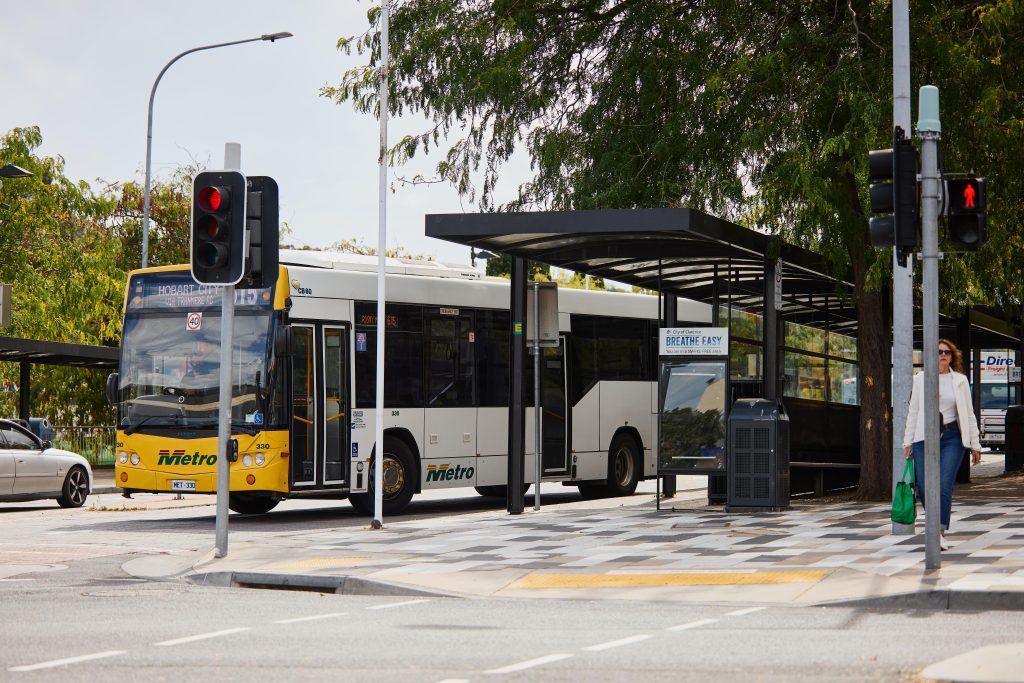
The Road Rules 2019 establish the requirements for the safe and lawful use of roads and road-related areas throughout Tasmania.
They regulate driver and vehicle behaviour, including stopping, parking, traffic signs, road markings, and access requirements.
For our enforcement activities, the Road Rules provide the authority for authorised officers to identify parking offences and issue infringement notices for breaches such as parking in restricted areas, exceeding time limits, failing to comply with parking signs, or stopping where prohibited.
We also administers and enforce the Dog Management Policy and the Dog Control Act 2000 by managing dog registrations, investigating nuisance and dangerous dogs, responding to dog attacks, and promoting responsible pet ownership – see Dogs.
City of Clarence also administers the Cat Management Act 2009, which regulates cat ownership and breeding, and the management of stray and feral cats. In addition, the Public Places By-law (2018) establishes rules for how public spaces owned, managed or controlled by council may be used, and provides a framework for issuing permits and licences for activities undertaken in these areas.
The by-law applies to public places including roads, parks, playgrounds, sporting facilities, paths, trails, buildings, and other council-managed land.

Built and natural areas
Stormwater
City of Clarence is responsible for managing approximately 450km of stormwater drainage infrastructure including pipes, pits, culverts, gross pollutant traps and detention basins. This involves undertaking inspections, responding to public enquiries, delivering maintenance and renewal works, and providing technical advice to support the effective operation, resilience and long-term performance of Clarence’s stormwater network.
A stormwater system management plan provides the strategic framework for managing the city’s stormwater network and guides planning and investment to reduce flood risk across Clarence’s nine urban areas.
Roads
Council is responsible for approximately 511 km of roads, including 39 km of unsealed roads, together with associated infrastructure such as footpaths, kerb and channel, traffic signs, line marking, pedestrian facilities and roadside assets.
There are two distinct but complementary functions of council — the management and operation of the road network and associated infrastructure, and the maintenance of those assets. These functions are delivered by separate teams.
Natural reserves
The strategic stewardship of natural areas is an important responsibility for us and involves protecting and enhancing natural assets including bushland reserves, coastal environments, waterways, native biodiversity, and tracks and trails.
To achieve this, council undertakes environmental planning, biodiversity conservation, habitat restoration and natural area management programs that protect ecological values while balancing community use and recreation – see Environment and Biodiversity. Activities include weed and pest management, bushfire mitigation, environmental monitoring, conservation projects, community education, and partnerships with landowners, community groups and government agencies.
Read the Clarence Natural Areas Strategy 2024–2034 and Bushfire Mitigation Strategy 2024–2033.
Asset renewal
If the total of Clarence’s built infrastructure assets were constructed today, the estimated replacement cost would be $1.4 billion.
Asset management planning presents ongoing challenges due to the age, condition and long-term funding requirements of infrastructure assets to ensure they remain fit for purpose, financially sustainable and able to meet community needs.
Effective management of these assets requires monitoring and service management, planning for asset renewal, coordination of annual budgets, and integration of financing requirements with our Long Term Financial Management Plan.
Read the Asset Management Strategy.
Construction and maintenance operations
The Operations team, based at the Mornington Depot, includes day-labour workforce and is responsible for the maintenance of parks, playgrounds, sportsgrounds, natural reserves, including bushland management and fuel reduction activities, roads, footpaths, stormwater infrastructure, and tracks and trails, as well as civil infrastructure construction and maintenance activities.
The team is responsible for council’s fleet and plant management, including asset replacement planning, depot workshop operations, and the maintenance of vehicles, plant and equipment to support service delivery across the organisation.
The Operations team also provides after-hours call-out crews to respond to urgent incidents outside normal operating hours.
See:
- Parks and Reserves
- Environment and Biodiversity
- Bushfire management
- Stormwater
- Coasts
- Tracks and trails
- Roads
- Footpaths
Asset renewal
If the total of our built infrastructure assets were constructed today, the estimated replacement cost would be $1.4 billion.
Asset management planning presents ongoing challenges due to the age, condition and long-term funding requirements of infrastructure assets to ensure they remain fit for purpose, financially sustainable and able to meet community needs.
Effective management of these assets requires monitoring and service management, planning for asset renewal, coordination of annual budgets, and integration of financing requirements with our Long Term Financial Management Plan. Read the Asset Management Strategy.
Construction and maintenance operations
The Operations team, based at the Mornington Depot, includes the day-labour workforce and are responsible for the maintenance of parks, playgrounds, sportsgrounds, natural reserves, including bushland management and fuel reduction activities, roads, footpaths, stormwater infrastructure, and tracks and trails, as well as civil infrastructure construction and maintenance activities.
The team is also responsible for our fleet and plant management, including asset replacement planning, depot workshop operations, and the maintenance of council vehicles, plant and equipment to support service delivery across the organisation.
The Operations team also provides after-hours call-out crews to respond to urgent incidents outside normal operating hours.
Waste and recycling
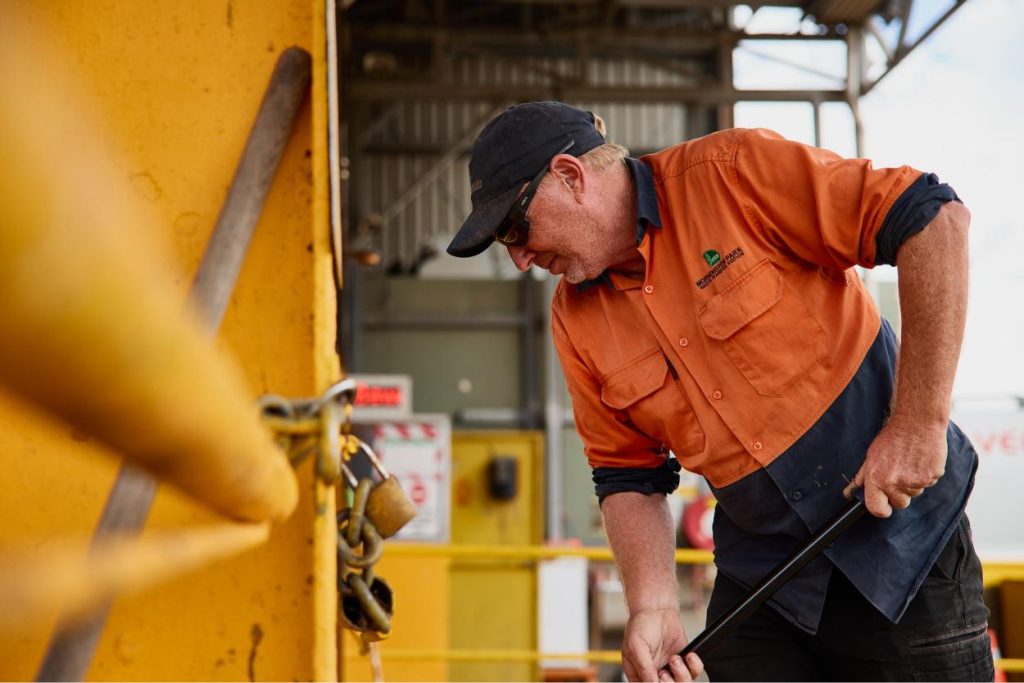
We provide more than two million kerbside bin collections each year to over 26,000 properties across Clarence, collecting more than 10,000 tonnes of general waste, 3300 tonnes of recyclables and almost 4000 tonnes of garden organics.
Recyclable materials collected through the yellow-lid bins include glass bottles and jars, aluminium and steel cans, clean plastic containers, cartons, cardboard, newspapers, junk mail and office paper. Collected recyclables are transported to a materials recovery facility, where materials are sorted, processed and sent to Australian and overseas markets to be transformed into new products.
In 2023–24, the kerbside recycling service diverted more than 7000 tonnes of materials from landfill.
To further reduce waste sent to landfill, we coordinate initiatives for difficult-to-recycle and bulky materials such as soft plastics recycling, tyre and problematic waste amnesty events, and a RecycleWall at Council Chambers.
Green waste collection is available for all residential properties in urban areas, including households in multi-unit dwellings but is not available in some rural areas. Moving forwarding the garden organics service will transition to Food Organics and Garden Organics, providing an opportunity to further reduce kerbside waste sent to landfill and associated emissions.