
Local Government Tasmania
There are three spheres of government in Australia — the federal government, state or territory government and local government.
Local government is the level of government closest to the community and is responsible for delivering a wide range of local services, infrastructure and community facilities. In Tasmania, local government is established under the Local Government Act 1993, which sets out the roles, responsibilities and powers of councils and elected members (Councillors).
There are 29 councils across Tasmania, each responsible for serving and representing the needs of its local community. While councils operate independently, they work within a legislative framework established by the Tasmanian Government.
The City of Clarence is one of Tasmania’s largest councils and plays an important role in shaping the future of the municipality through community leadership, strategic planning, service delivery and responsible governance.
As a Councillor, you are part of the elected body responsible for setting council’s strategic direction and making decisions on behalf of the diverse needs of the Clarence community.
Further information about local government and the City of Clarence can be found through the following resources:
- Local Government Act 1993
- How Council Works
- Local Government Association of Tasmania (LGAT)
- Department of Justice – Office of Local Government
Local government peak and advisory bodies
There are 537 councils Australia-wide, which employ more than 200,000 people across about 40 occupations, and are responsible for about one-third of all Australia’s public infrastructure assets. In Tasmania, local government employs around 4600* people making it an important public sector, serving the Tasmanian community.
Australian Local Government Association
Peak bodies exist to represent the collective interests of a sector and the Australian Local Government Association is the voice of local government at a federal level, representing the states and territories in dealing with the Australian Government and national policy processes.
Local Government Association of Tasmania
The Local Government Association of Tasmania (LGAT) is an incorporated body under the Local Government Act 1993 and the peak body for local government in Tasmania. Established in 1911, it is part of a federated advocacy system alongside the seven other state and territory local government associations.
All 29 Tasmanian councils are members of LGAT and pay an annual membership subscription. In return, the association coordinates research and policy, provides advocacy to the Tasmanian Government and through the national association, delivers professional development and training for Councillors, partners to run sector programs and manages statewide procurement panels.
LGAT advocacy priorities are guided by member councils and its governance is overseen by a council-nominated Board – the General Management Committee.
Premier’s Local Government Council
The Premier’s Local Government Council (PLGC) is a top-level forum where the Premier and councils meet to discuss big-picture issues affecting local government in Tasmania and to improve cooperation between state and local government. The PLGC is chaired by the Premier of Tasmania and includes LGAT, mayors and councillors. It operates at a strategic, whole-of-sector level, sitting above more operational or technical engagement forums.
Minister’s Local Government Forum
The Minister’s Local Government Forum is a formal collaboration mechanism between the Tasmanian Government and the local government sector in Tasmania.
It is a high-level forum chaired by the Tasmanian Minister for Local Government that brings together the Minister for Local Government, LGAT, senior representatives from the Office of Local Government and relevant state agencies and council representatives to discuss statewide issues affecting local government and to collaborate on policy, reform and legislative priorities. It meets at least twice a year.
The Premier’s Local Government Council and Minister’s Local Government Forum follow an agreement which sets out the principles, terms of reference and processes.
Read the consultation agreement between the Tasmanian Government and local government.
*Reference to the Australian Bureau of Statistics
Multi-level government partnerships
Multi-level government partnerships are collaborative arrangements between local, state and Australian governments that align strategic priorities and coordinate investment in projects of regional significance. Through partnerships such as the Hobart City Deal, council works with other governments to advocate for Clarence, secure funding and deliver long-term outcomes for our community.
Read more about the – Hobart City Deal – City of Clarence.
Southern Waste Solutions Joint Authority
Southern Waste Solutions (SWS) is a jointly owned waste management organisation established by the Clarence, Sorell, Tasman and Kingborough councils. It operates a network of waste management facilities across southern Tasmania, including the Copping Waste Precinct and the Lutana Resource Recovery Centre.
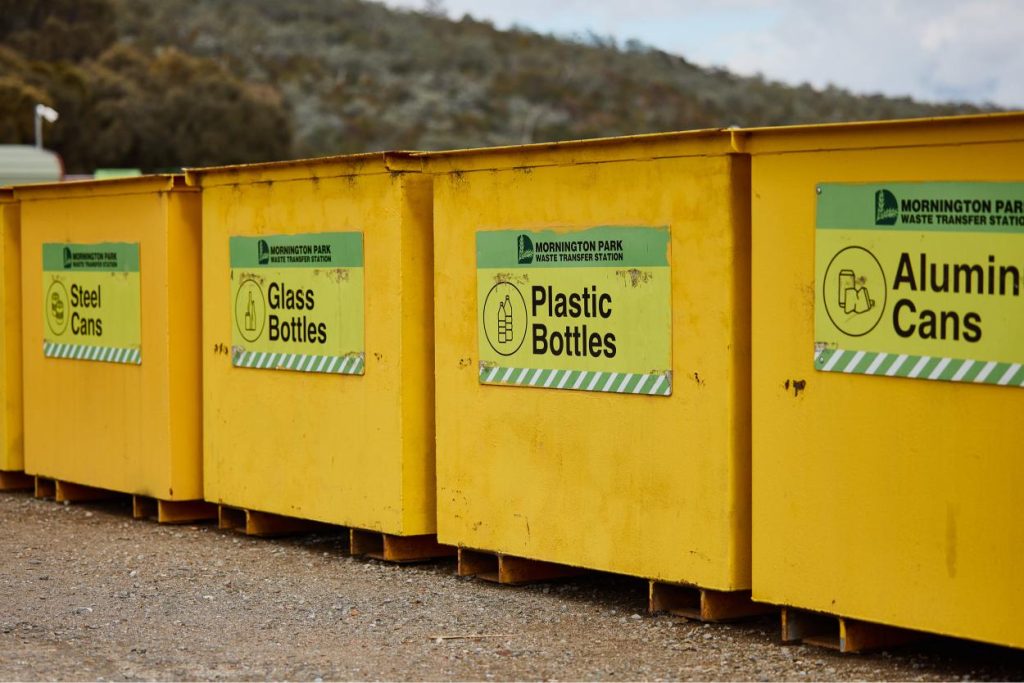
The Copping Waste Precinct includes the Copping regulated waste disposal cell (C Cell), which provides specialised disposal capacity for regulated waste. Alongside this, the Lutana Resource Recovery Centre supports resource recovery and waste management activities for both local government and commercial customers.
SWS manages waste services for approximately 50% of Tasmania’s population, supporting the communities of Break O’Day, Brighton, Clarence, Glamorgan Spring Bay, Glenorchy, Hobart, Huon Valley, Kingborough, Sorell, Southern Midlands, and Tasman local government areas.
The Copping Refuse Disposal Site Joint Authority was established in 2001 as a Joint Authority under the Local Government Act 1993. and has since evolved into the organisation now operating as Southern Waste Solutions, delivering regional wa