
Council as a planning authority
In addition to its role as a local government authority, the City of Clarence is also a Planning Authority under the Land Use Planning and Approvals Act 1993 (LUPAA). As a Planning Authority, Council is responsible for administering and applying Tasmanian Planning Scheme – Clarence (which includes the Clarence Local Provisions Schedule) within the Clarence municipal area.
As a planning authority, Council’s role is not to determine whether a development is popular or unpopular. Rather, it is to assess planning matters against the relevant legislation, planning scheme provisions, policies and evidence. Decisions must be based on planning merit and the applicable statutory framework.
A planning authority is responsible for:
- assessing and determining applications for planning permits
- enforcing the Tasmanian Planning Scheme – Clarence
- assessing and determining requests to amend the Clarence Local Provisions Schedule
- supporting strategic land use planning across the municipality
- ensuring planning decisions comply with the Land Use Planning and Approvals Act 1993.
Councillors play an important role in planning decisions but must do so within the legal framework established by planning legislation.
In addition to local, state and federal government, there are many other organisations that have a role in Tasmania’s planning system. You can find out who does what on the State Planning Office’s website.

The planning scheme
The Tasmanian Planning Scheme-Clarence is the statutory document that guides how land is used and developed throughout Clarence. It consists of two parts:
- the State Planning Provisions, which apply across Tasmania
- the Clarence Local Provisions Schedule, which contains local zoning, overlays, specific area plans and other controls that apply within the City of Clarence.
The planning scheme establishes:
- administrative provisions and exemptions
- land use zones
- development and use standards
- heritage and other specific matter provisions
- environmental and natural hazard provisions
- specific area plans
- site-specific planning controls.
The planning scheme provides the controls against which applications for planning permits are assessed and determined. It is intended to promote consistent, transparent and sustainable planning outcomes across Clarence.
Read more information about the planning scheme.
How development applications are assessed
When a development application is received, officers assess it against the requirements of the Tasmanian Planning Scheme-Clarence and other relevant legislation.
The assessment process considers matters such as:
- use and development classification
- compliance with applicable planning scheme standards
- impacts on neighbouring properties
- environmental considerations
- infrastructure and servicing requirements
- heritage, landscape and natural hazard issues
- any representations received during public advertising (where required) – plans are advertised on our website here: Advertised Plans.
Importantly, planning applications must be assessed on planning grounds. Matters that are not relevant under planning legislation cannot be taken into account when making a decision and discretion is limited to those matters which trigger a discretion.
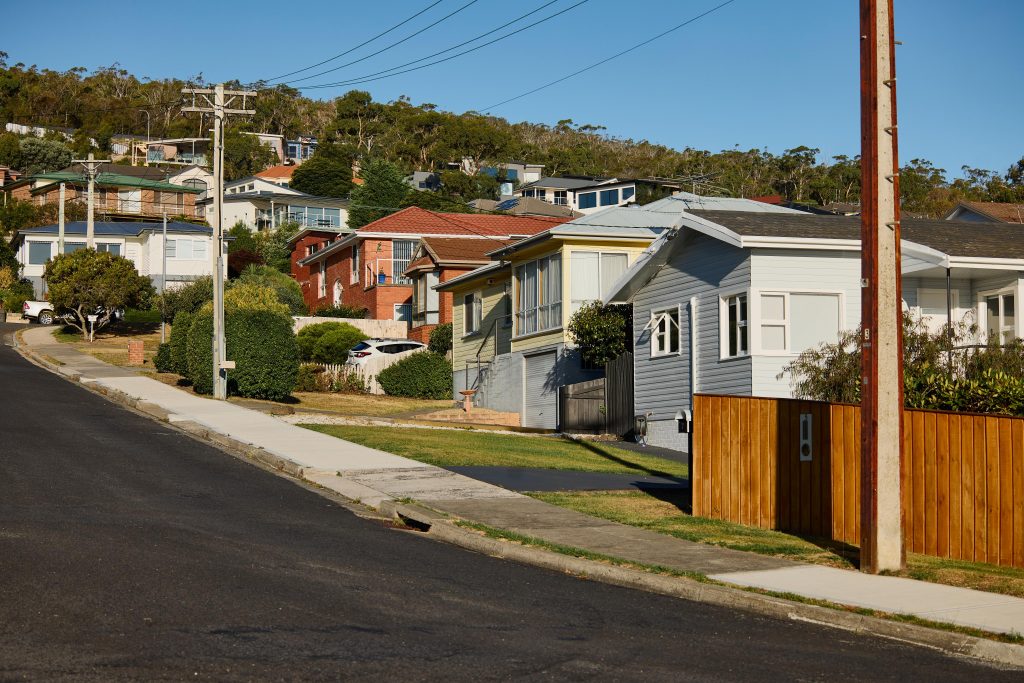
Examples of matters that are generally considered relevant include:
- the nature of the use or development
- building height, bulk and scale
- privacy and overlooking
- traffic and parking impacts
- environmental impacts
- heritage considerations
- other applicable planning scheme standards.
Importantly, the planning authority is also guided by previous determinations of the Tasmanian Civil and Administrative Tribunal, the Tasmanian Supreme Court and courts of superior jurisdiction.
Examples of matters that are generally not relevant planning considerations include:
- personal opinions about an applicant
- potential impacts on property values or views
- commercial competition
- personal disputes between neighbours
- whether a Councillor personally likes or dislikes a proposal.
Planning decisions must be evidence-based and supported by the planning framework rather than personal preference.
Public exhibition of applications and representations
Not all planning permit applications are advertised to the public. Only applications that require Council to make a judgement or decision under the planning scheme are advertised.
If an application fully complies with the planning scheme and is permitted, Council cannot refuse it. Likewise, if an application is prohibited under the planning scheme, Council cannot approve it.
When an application is advertised, community members can provide feedback or make a representation during the advertising period. Council must consider all valid representations received within that timeframe.
Advertising usually includes:
- a notice in the local newspaper
- a sign displayed on the property
- letters sent to neighbouring property owners and occupiers.
- on our website – see Advertised Plans
Role of elected member in planning decisions
Not all planning matters are decided by Councillors. Each year, around 750–900 planning applications are received and assessed, including applications that do not require a planning permit.
To help process applications efficiently, Council has delegated certain decision-making powers to planning officers. This means officers can approve some applications, including those that receive no more than one representation or meet other delegation criteria.
Applications that cannot be decided under delegation are referred to Councillors for a decision at a Council meeting. In these cases, planning officers prepare an assessment report and recommendation to help inform Councillors’ decision-making.
When acting as members of the planning authority, Councillors have a statutory responsibility to make planning decisions fairly, impartially and in accordance with the planning scheme and relevant legislation.
Councillors should:
- approach each application with an open mind
- consider officer reports and professional advice
- base decisions on planning merit
- avoid predetermining outcomes before all information has been considered
- declare and manage any conflicts of interest
- treat all applicants and submitters fairly and consistently.
Councillors should be mindful that planning decisions differ from other Council decisions. While many Council matters involve broad policy considerations, community expectations and political judgement, planning decisions are quasi-judicial in nature and must be based on the statutory planning framework.
For this reason, Councillors should avoid making public commitments or statements that could suggest they have predetermined the outcome of a development application before it has been formally considered.
Strategic planning vs statutory planning
While often used interchangeably, strategic planning and statutory planning perform different functions.
Strategic planning
Focuses on the long-term future of the municipality. It helps identify how Clarence will grow and evolve over time and informs decisions about housing, employment, transport, infrastructure, environmental management and community development.
Examples include:
• community and strategic plans
• land use strategies
• structure plans
• master plans
• planning scheme amendments.
Statutory planning
Involves the day-to-day administration of the planning system and the assessment of development applications against the planning scheme and legislative requirements.
Examples include:
• development applications
• subdivision applications
• confirmation of ‘no permit required’ status
• amendments to planning permits
• sealing of final plans of subdivision
• strata scheme applications
• compliance and enforcement.
Understanding this distinction is important. Strategic planning is where Councillors have the opportunity to shape future policy and direction, while statutory planning requires decisions to be made within the framework established by legislation and the planning scheme.
Read more about planning matters on our website.